Written by Ioana Horhoianu
Music, fashion, design, and art have been shaped by the time periods they belong to. From the interwar years – with the rise of jazz music, long cigarettes, and a newly unrestrained desire for freedom – to the 90s explosion of hip-hop and the polished, candy-colored pop of the 2000s, cultural expressions have evolved in tandem: an all-encompassing manifesto of their social environments. These movements gave rise to what we now call trends- mirrors held up to society.
But what is happening today?
With the rise of social media and targeted ads, you might see something, like it, buy it, and by the next day, the page has already turned. Enter micro-trends. From carefully curated mood-boards or that faux fur you really loved at the vintage market last year, no one is entirely immune.
Every aesthetic now feels like a neatly packaged personality – one that rarely exists beyond TikTok or Instagram. What does cottagecore really mean? Have you ever seen anyone fully embody the office siren aesthetic?
Inspiration?
What’s interesting about being drawn to a trend is that something pulled you toward it in the first place. Maybe it’s a lifestyle, a place, or something more instinctive – something almost impossible to articulate, yet immediately recognizable: color.
Color is the backbone for every cultural trend, whether its story is told through art, fashion, or even music. The 80s are electric purple. The 70s stretch out in burnt orange and muted browns. It’s the first element that pops in any mood-board, any design, the quickest way to evoke a feeling. And in art, as it moved toward abstraction, color stopped being just a supporting element – it became the subject itself.
This is where Mark Rothko enters the conversation.
Stripping painting down to floating fields of color, Rothko wasn’t interested in depicting the world as we see it, but as we feel it. His canvases don’t tell stories in the traditional sense – they ask you to stand still, to look, and to experience it.
His exhibition “Rothko in Florence” felt like a walk between states of being, an extroverted gaze cast in reds, turning into a deep contemplative blue. The curation traced the artist’s evolution, revealing a gradual process of Rothko coming into his own: stripping away form, abandoning figuration, and allowing himself to feel and communicate through the tension and harmony of color.
The contrasts suggested multiplicity of emotional dimensions. Each work seemed to oscillate between extremes, evoking either a profound sense of optimism or an equally intense melancholy. I found myself searching for meaning in the exact point where opposing color fields met – where they blurred into one another, where neither fully dominated.
What does it make you feel? What does it say about you?
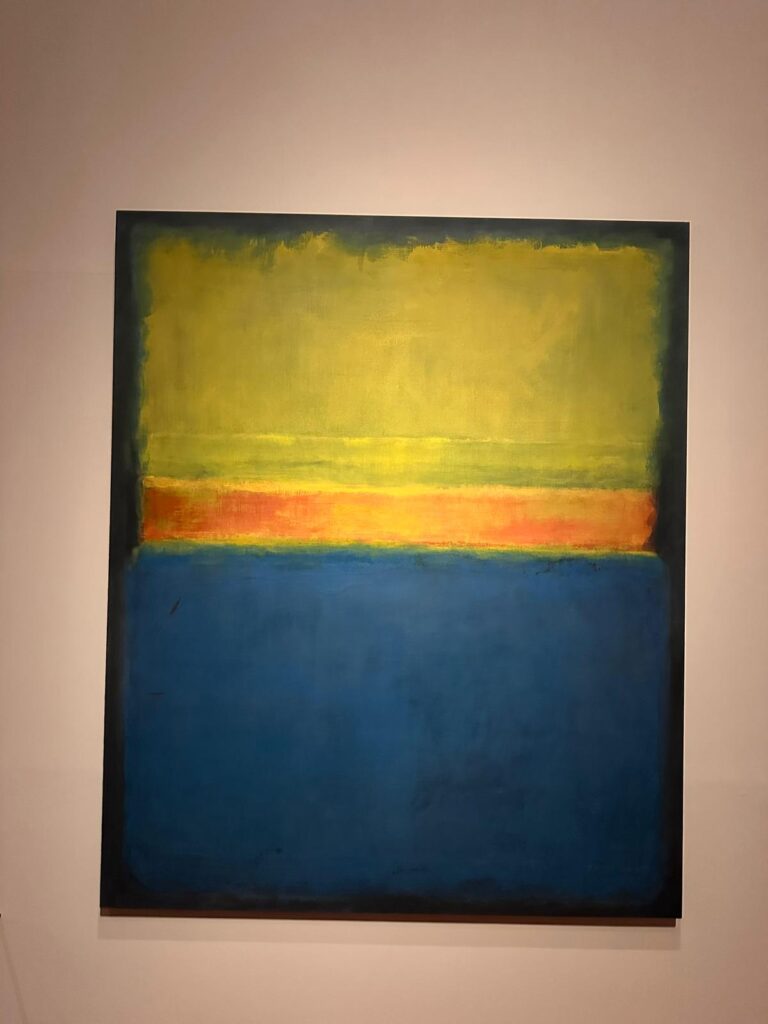
Standing in front of his canvases, you might watch yourself returning to one specific artwork. Maybe it’s not the one you like most, but the one that holds you a second longer than the others. One that may feel uncomfortably familiar.
Because choosing a Rothko is not really about preference. It’s about recognition.
If you find yourself drawn to the deep reds, the ones that seem to pulse, to expand so much they seem to escape the canvas, you might be someone who experiences the world outwardly. There is a certain intensity there, a need to feel things fully, even at the risk of excess. Red is never just warmth – it’s urgency, desire, sometimes unrest.
If, instead, you gravitate toward the blues – the quieter, heavier fields – you may lean toward introspection. These works don’t demand attention, they absorb it, almost making you feel like they are watching you instead. This blue is not calm; it’s a depth that reflects your own questions right back at you.
Then there are the artworks suspended in contrast – where light meets dark, where colors seem to hover on the edge of dissolving into one another. If these are the ones you choose, you might be someone comfortable in ambiguity. Someone who doesn’t need resolution, but instead lingers in transition, in a space where meaning does not have to be fixed.
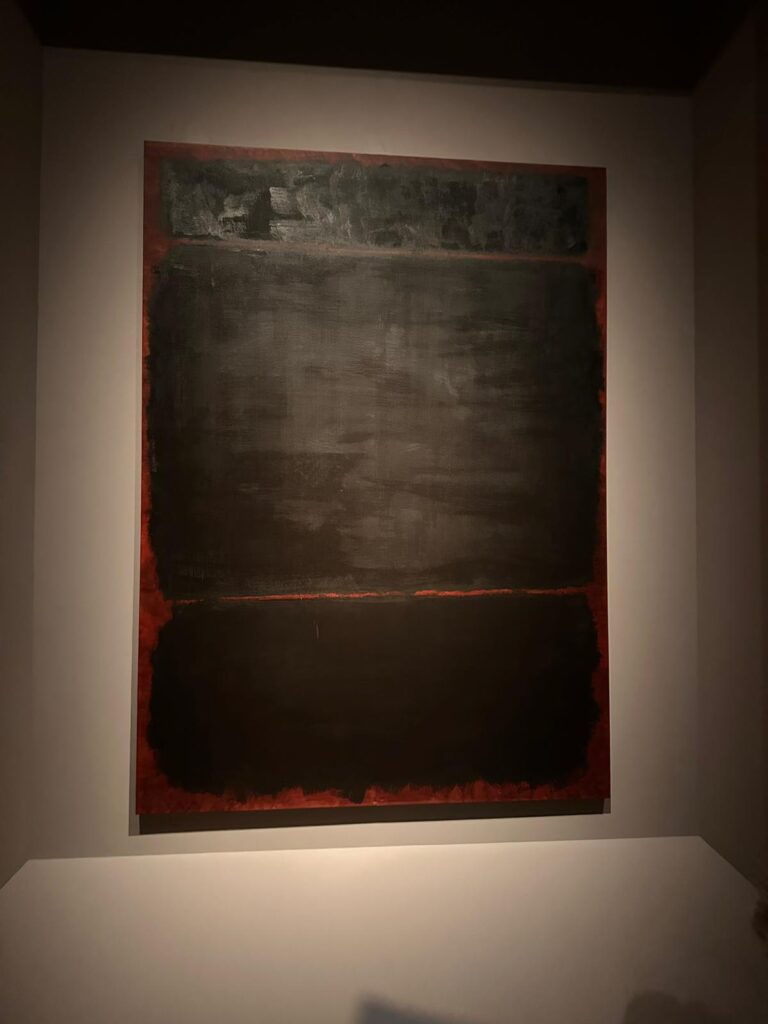
Rothko’s paintings don’t tell you what to feel – he creates the conditions for you to encounter the emotions within you. It’s less about what’s on the canvas, and more about what you bring to it. And isn’t that the point?
In a world of micro-trends and ever-shifting aesthetics, where identities are packaged into names and neatly curated grids, it’s easy to forget that not everything we are drawn to can be explained – or labeled. Not every preference needs a title, a category, or a mood board.
Maybe what draws you in isn’t a trend, but a feeling. What draws you in?